If you begin utilizing the drug once again, speak to your physician, your psychological health expert or another person who can help you right away. Oct. 26, 2017.
If you effectively, we guarantee you'll remain tidy and sober, or you can return for a. * * Please call your chosen centre for availability.
For centuries, dependency to alcohol and drugs has been seen as a moral stopping working. The person addicted was deemed doing not have in willpower. However while that view is still held by some individuals, a new model for comprehending dependency has increased to the leading edge in the clinical neighborhood. The reality is that addiction is a disease, and the research exists to support it.
This advancement has huge ramifications for those who are living with and battling against addiction. According to DrugAbuse. gov, "Dependency is a persistent, typically relapsing brain illness that causes compulsive drug looking for and usage, regardless of hazardous consequences to the addicted individual and to those around him or her." The key here is that the addicted person will continue utilizing even when they see the damage their dependency is triggering.
But addiction is characterized by the. The client will enter into remission, but may have numerous relapses prior to beating the disease completely. And like these illness, addiction too can be treated and handled. Many individuals who fight the illness model of addiction will make the point that the addicted individual selects to start utilizing drugs or alcohol.
Who Has A Drug Addiction Problem Things To Know Before You Buy
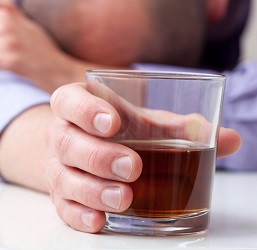
Some individuals try drugs or alcohol and never get addicted. Others, nevertheless, have a biological or situational predisposition to addiction. Once they start using, the addiction handles a life of its own and is much more difficult to manage. Addiction is also thought about an illness due to the fact that it can trigger changes to the brain.
Every drug, including alcohol, disrupts the reward system in the brain. Sadly, long-lasting usage can cause that affect the brain's ability to operate. Particularly, the areas of the brain that are connected to making choices, discovering, remembering, and controlling behavior are all impacted. According to a paper released by Ruben D.
Volkow (both from the National Institute on Drug Abuse), "there appear to be intimate relationships in between the circuits interrupted by mistreated drugs and those that underlie self-discipline [] the time has concerned acknowledge that the procedure of dependency erodes the very same neural scaffolds that enable self-discipline and proper decision making." With dependency wearing down self-control, it's not a surprise that it's very challenging for a drug abuser to stop on their own.
When you learn that dependency is an illness, 3 facts end up being clear: When an individual loses their life to a drug addiction, somebody undoubtedly says something along the lines of "they made their choice." The thought goes that the addicted individual made the conscious decisions to continue their drug dependency and they got what was pertaining to them.
While there is an aspect of choice included, making the best option is so much more difficult for somebody with an addiction. The large majority of addicted people are not addicted since they want to be, but due to the fact that they feel they require the compound. And in a lot of cases, their bodies are so depending on the substance that they really do.
The Greatest Guide To What Can You Do To Prevent Drug Addiction
And unfortunately, for some compounds, detoxing can be exceptionally dangerous. This is where a rehabilitation center can be found in. Much like other chronic recurring conditions, repeated treatments are frequently essential to accomplish success in the long run. At a healing center, these treatments will take the form of talking with your counselor, taking medication to help alleviate the withdrawals, and participating in activities that are concentrated on assisting you heal.
Following the design of addiction as an illness, relapse is not a failure of treatment. Relapse happens, and it just indicates that treatment needs to be altered in order to continue working. At The Healing Village, we complete heartedly believe that dependency does not need to rule your life.
Learn more about our treatment choices, and do not hesitate to connect to one of our thoughtful representatives with any questions you have by calling us today. Baler, Ruben D., Nora D. Volkow. "Drug dependency: the neurobiology of interfered with self-control." ScienceDirect. Elsevier Ltd., 27 Oct 2006. Web. 7 June 2016. . Leshner, Alan I. "Science-Based Views of Drug http://knoxwipq826.almoheet-travel.com/get-this-report-on-how-to-beat-drug-addiction Dependency and Its Treatment." The JAMA Network. American Medical Association, 13 Oct 1999. Web. 8 June 2016.
jamanetwork.com/article. aspx?articleid= 191976 >. Volkow, Nora. "Why do our brains get addicted?" TEDMED. TED Conferences LLC., 2014. Web. 8 June 2016. . "When and how does substance abuse start and progress? National Institute on Drug Abuse. U.S. Department of Health and Human Solutions, Oct 2003. Web. 10 June 2016.
https://www. drugabuse.gov/ publications/preventing-drug-abuse- among-children-adolescents-in-brief/ chapter-1-risk-factors-protective-factors/ when-how-does-drug-abuse-start-progress >. Margaret F.'s words catch a core belief of the traditional kind of treatment program she attended, one common in 12-step-based centers. Leading expert organizations including the American Medical Association, American Psychiatric Association, World Health Company, and American Society of Dependency Medicine (ASAM) register for the idea that alcohol and other drug addictions are diseases.
Where Can Someone Get Help For Drug Addiction Fundamentals Explained
Among them is neuroscientist Marc Lewis, Ph. D., who eloquently clarifies his reasoning in a brand-new book, The Biology of Desire: Why Addiction is Not a Disease. Real-life stories of five various people who have actually battled with addiction flesh out the structure he's constructed from the most recent neuropsychological findings.
So why would we call dependency an illness that requires medical treatment? Saying dependency is a disease suggests that the brain can no longer changethat it's an end state. But no, it's not end state.-Marc Lewis We understand that treatment isn't needed by the majority of to get rid of addiction, so because sense it's not an illness.
We've been discussing neuroplasticity for decades. That is, the brain continues altering due to modifications in experience, self-motivated modifications in habits, as an outcome of practice, remaining in a different environment. Saying addiction is an illness recommends that the brain can no longer changethat it's an end state (how to stop drug addiction).
Initially, I'm not saying that addiction is not a severe problem clearly it can be for many individuals. In regards to brain modification, you could say that neuroplasticity has a dark side. However rather than an illness, I would state that dependency is a habit that grows and perpetuates itself relatively rapidly when we repeatedly pursue the very same extremely attractive goal.
rather than a disease, I would state that addiction is a habit that grows and perpetuates itself relatively quickly when we repeatedly pursue the same highly appealing goal.-Marc Lewis However with dependency, much of this rewiring is accelerated by the action of dopamine, a neurotransmitter launched in action to highly compelling goals, creating an ever-tightening feedback loop of desiring, getting, and loss.